
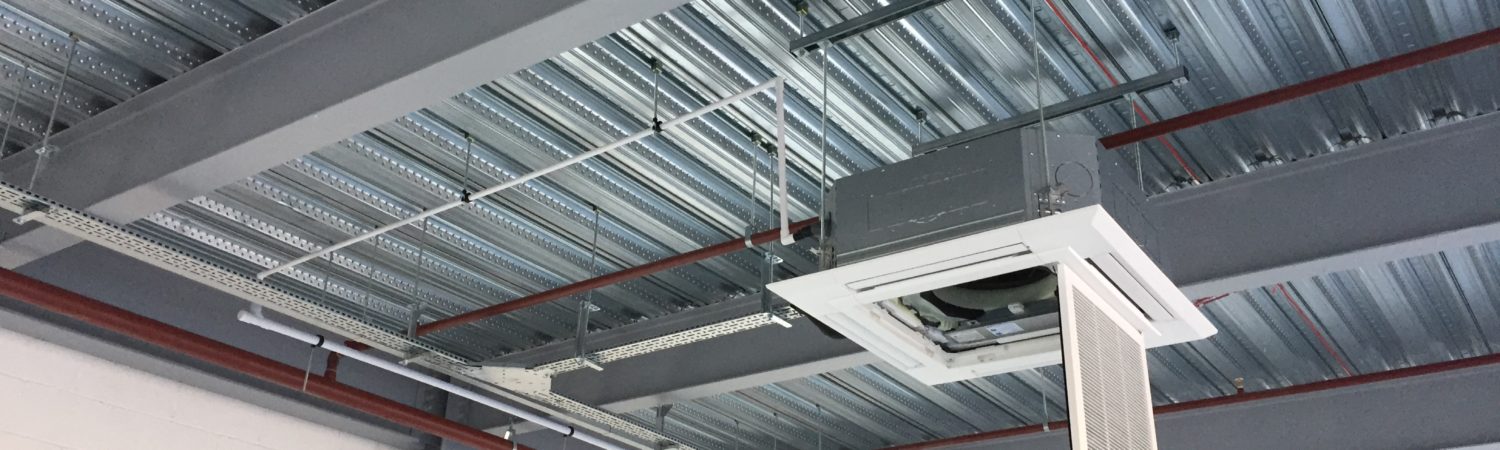
Choosing the right commercial air conditioning system can improve comfort, manage energy consumption and support daily operations. However, different buildings require different solutions.
From offices and healthcare environments to industrial settings, factors such as building size, occupancy and temperature requirements influence which equipment is most suitable.
This guide explores the main system types and what to consider before making a decision.
Which Commercial Air Conditioning System Is Best?
The best system depends on your building’s layout, operating hours and heating and cooling requirements.
Smaller commercial spaces may benefit from split or multi-split systems, while larger buildings often require variable refrigerant flow (VRF) technology. Specialist environments, including server rooms, may need close-control equipment.
The right choice should reflect how your building operates rather than equipment specifications alone.
Understanding The Different Types Of Commercial Air Conditioning
Split Air Conditioning Systems
Split systems connect one indoor unit to one outdoor unit, providing heating and cooling for individual rooms.
They are commonly suitable for smaller offices, meeting rooms and reception areas requiring independent temperature control.
Multi-Split Air Conditioning Systems
Multi-split systems connect several indoor units to one outdoor unit.
They are useful for commercial properties with multiple rooms and limited outdoor space. Individual temperature settings provide flexibility, although operating modes depend on the equipment.
Variable Refrigerant Flow (VRF) Systems
VRF systems manage heating and cooling across multiple zones, making them suitable for larger commercial buildings.
They adjust refrigerant flow according to demand, supporting efficient operation. Certain configurations also allow simultaneous heating and cooling in different areas.
Heat Pump Systems
Many modern commercial systems incorporate reversible heat pump technology to provide heating and cooling.
Rather than generating heat directly, heat pumps transfer thermal energy. This technology can be used within split, multi-split and VRF configurations for year-round temperature management.
Close-Control Systems
Close-control equipment provides precise temperature management for specialist environments, including server rooms and technical spaces.
These systems are particularly relevant where equipment generates continuous heat or environmental stability is essential.
What Should You Consider Before Choosing A System?
Building Size And Layout
Floor area, ceiling heights, insulation and internal heat sources influence the required capacity.
Professional load calculations help determine appropriate equipment sizing and avoid unnecessary energy consumption.
A large open-plan office may require a different solution from a building containing several smaller rooms.
Energy Efficiency And Running Costs
Running costs depend on equipment performance, operating hours and temperature controls.
Correctly sized systems with suitable zoning can help reduce wasted energy.
Consider long-term operating costs rather than focusing entirely on the initial purchase price.
Occupancy And Temperature Requirements
Different areas may need independent temperature settings.
Offices, healthcare spaces and industrial environments can have varying occupancy patterns and operational demands.
For example, a meeting room used occasionally has different requirements from a continuously occupied office.
Ventilation And Indoor Air Quality
Most conventional air conditioning systems recirculate indoor air rather than supplying fresh outdoor air.
Separate commercial ventilation may therefore be necessary to meet the building’s requirements, particularly in occupied offices and healthcare environments.
Maintenance And Reliability
Maintenance access and ongoing servicing should influence equipment selection.
Regular air conditioning maintenance helps maintain performance and identify developing faults.
For critical environments, reliability and the consequences of unexpected downtime should also be considered.
Matching Air Conditioning To Your Commercial Environment
Different commercial environments have different priorities.
Offices: Comfort, quiet operation and flexible temperature settings are often important. Multi-split or VRF systems may suit buildings with several independently controlled rooms.
Healthcare Environments: Administrative, clinical and technical spaces can have different environmental requirements. Specialist areas may need additional consideration of ventilation and relevant standards.
Industrial Buildings: Machinery, internal heat gains and operating schedules can influence equipment selection.
Server Rooms: Dedicated cooling or close-control equipment may be necessary to manage continuous heat generation.
Understanding these differences helps ensure the selected system supports daily operations.
H2: Why Professional System Design Matters
Selecting equipment based solely on purchase price or floor area can lead to incorrect sizing, inefficient operation and inadequate temperature control.
A professional assessment considers building layout, heating and cooling loads, occupancy, installation requirements and long-term maintenance.
It can also identify practical considerations such as outdoor unit positioning and access for future servicing.
New Air provides commercial air conditioning installations for organisations requiring solutions suited to their buildings and operations.
Frequently Asked Questions
Which Commercial Air Conditioning System Is Most Efficient?
Efficiency depends on correct sizing, equipment performance, controls and operating conditions. No single system is best for every building.
Is VRF Better Than Multi-Split Air Conditioning?
VRF is often suitable for larger buildings with extensive zoning requirements, while multi-split systems can be practical for smaller properties.
Can Commercial Air Conditioning Provide Heating?
Yes. Many modern systems incorporate reversible heat pump technology to provide both heating and cooling.
Does Commercial Air Conditioning Provide Fresh Air?
Not necessarily. Many systems recirculate indoor air, so separate ventilation may be required.
How Often Should Commercial Air Conditioning Be Serviced?
Servicing frequency depends on equipment type, usage, manufacturer recommendations and applicable requirements. Planned maintenance helps support reliable operation.
Choosing The Right Solution For Your Building
The right commercial air conditioning system should balance comfort, energy efficiency, reliability and operational requirements.
Split and multi-split systems can suit smaller commercial spaces, while VRF technology offers flexibility for larger buildings. Specialist environments may require dedicated temperature-control equipment.
At New Air, we help organisations assess their requirements and explore appropriate heating and cooling solutions. If you’re planning a new installation or replacing existing equipment, contact our team to discuss suitable options for your commercial property.